About Publius
Healing the political divide by building a Citizens Political Professional Organization (CPPO) & learning how to govern for all.
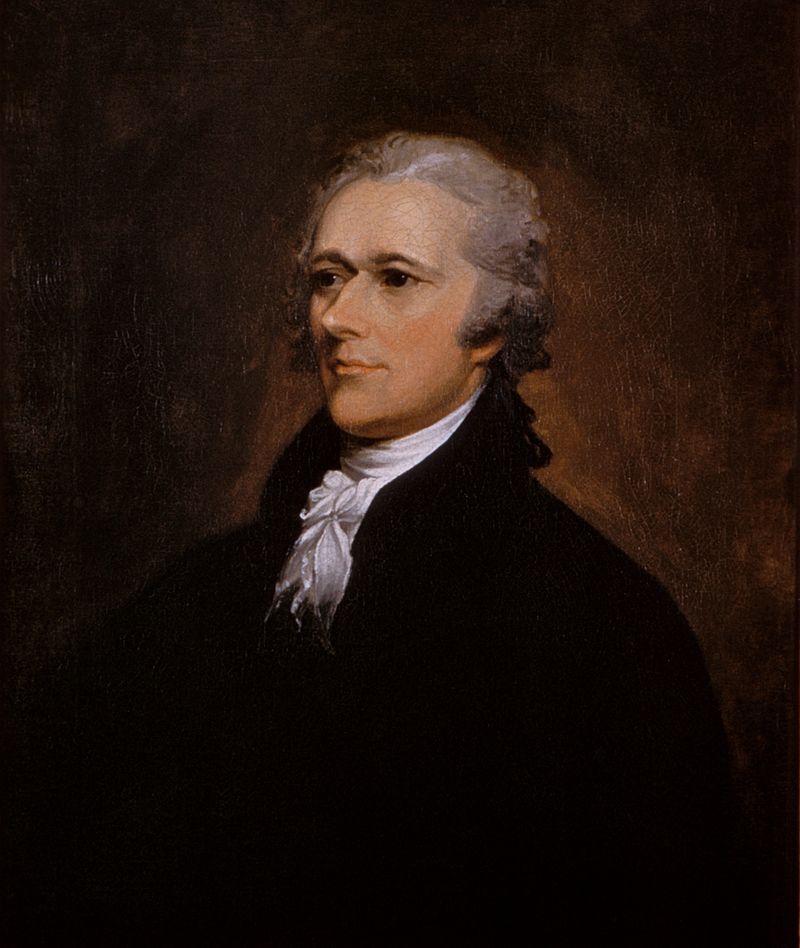
I am Gregory David Spehar. I write here as Publius. I am independent of any party, and I do not speak for a company. Federalist 2.0 is my effort to keep this country from losing the habit of governing itself.
Federalist No. 1
It has been frequently remarked, that it seems to have been reserved to the people of this country, by their conduct and example, to decide the important question, whether societies of men are really capable or not, of establishing good government from reflection and choice, or whether they are forever destined to depend, for their political constitutions, on accident and force.
That is the claim. The papers that follow it are here: Papers.
This work is peaceful, and it is open to anyone.
Federalist 2.0, LLC is a for-profit for now, with a nonprofit as the later goal. It is not taking donations.
Contact Publius: publius.federalist@yahoo.com
 @Federalist26
Further
The Federalist (later known as The Federalist Papers) is a collection of 85 articles and essays written by Alexander Hamilton, James Madison, and John Jay under the pseudonym "Publius" to promote the ratification of the United States Constitution. The first 77 of these essays were published serially in the Independent Journal, the New York Packet, and The Daily Advertiser between October 1787 and April 1788. A two-volume compilation of these 77 essays and eight others was published as The Federalist: A Collection of Essays, Written in Favor of the New Constitution, as Agreed upon by the Federal Convention, September 17, 1787 by publishing firm J. & A. McLean in March and May 1788. The collection was commonly known as The Federalist until the name The Federalist Papers emerged in the 20th century.
The authors of The Federalist intended to influence the voters to ratify the Constitution. In Federalist No. 1, they explicitly set that debate in broad political terms. The references are The Federalist Papers and Alexander Hamilton.
Who am I?
I am Gregory David Spehar. I write here as Publius. I was born in the Midwest, I have family across the United States, and I have lived and traveled abroad. I have several degrees, and I have worked in healthcare, energy, and nonprofit organizations. I belong to no party, and I speak for no company.
Federalist 2.0 takes no donations and runs no advertising. There is no funder to please, and no reason to bend a result to keep the lights on. The work is peaceful, and it stays inside the Constitution.
TRUE NORTH is the moral heading of this project. It assumes one God, and it asks how a people can govern so that fewer are hurt by the political class. It leaves room for character, and for a society that can sustain itself by creating wealth.
Commitment to non-discrimination and non-violence
Adopted by the Board of Directors on 2019-08-04.
Federalist2.org does not and shall not discriminate on the basis of race, color, religion (creed), gender, gender expression, age, national origin (ancestry), disability, marital status, sexual orientation, or military status, in any of its activities or operations. These activities include hiring and firing of staff, selection of volunteers and vendors, and provision of services. We are committed to an accepting and welcoming environment for members of our staff, clients, volunteers, subcontractors, and vendors.
Federalist2.org is an equal opportunity employer. We will not discriminate, and will take affirmative action measures to ensure against discrimination in employment, recruitment, advertisements for employment, compensation, termination, upgrading, promotions, and other conditions of employment against any employee or job applicant on the bases of race, color, gender, national origin, age, religion, creed, disability, veteran's status, sexual orientation, gender identity, or gender expression.
Federalist2.org does not advocate for, and does not associate with, those who would advance their own causes or causes associated with the Federalist 2.0 philosophy through violence. The essence of the philosophy is that people of a nation will migrate to the political system they deserve. A society built on corruption and deceit becomes burdensome and migrates toward dictatorship or tyranny. A society built on virtue and action builds a political system that supports the natural growth of wealth to the benefit of all. Within this concept, there is no place for violence. There is open discussion, and an invitation for others to take the same course.
If a Federalist 2.0 member is in a place where their life is in danger, we do advocate action based on self-defense. When such a case is known, the Board of Directors will address it along with the related materials from the police, to determine whether it met the defense-of-self test. If a member is found not to have acted in self-defense, and was trying to advance their own political position or to pretend they were acting on Federalist 2.0's behalf, the Board will issue a statement that the individual was acting on their own interest and has been removed from membership.
What do we hope to answer?
Within this organization we hope to answer some key questions through the following approach.
Building New Federalist Papers that answer such questions as:
- What is the goal of every society?
- What are the challenges to achieve this goal?
- What must the political class have to achieve this goal?
- How must these competing interests be partitioned to meet those needs?
Building New Principles from those papers:
- What were the old and new papers trying to say from a set of principles?
- How should those principles be organized?
- What perspective did the Old Federalist Papers try to hold?
- How can we articulate those principles in today's world?
Building a Unified Theory that attempts to integrate these perspectives and explain a societal goal:
- How does each perspective compare to other perspectives?
- What does wealth play in those perspectives?
- What role does God play within this context? (Why do the founding fathers speak so much about God?)
- How can this viewpoint affect the New Principles across society, and tools such as media?
Building the tools and applications to measure and track the individual, the group, and society as a whole, and the perspective they are headed toward:
- How do you measure the media narrative?
- Can you measure an individual's perspective?
- Can you create tools and applications to reward people for those perspectives?
- Can you build tools that would enforce a perspective for the best interest of society, minimizing the impact to all groups?
This approach and theory came from efforts some 15 years ago and then sat dormant for some time. Given the level of discord around the world and in the United States, there needs to be an effective discussion around what it means to govern. To keep outside influence from driving that conversation, I am running Federalist 2.0, LLC as a for-profit until I can raise enough cash and attract the right partners to create the nonprofit. The nonprofit is the end goal. We are not taking donations at this time. We are raising cash to set the stage to take donations. Please see the Campaign, Patreon, and GiveSendGo.
To best find contributors, all outlets and published content will be non-monetized. Part of the vision is that people provide content from their own works. I post them here and reference their works, so the traffic can go back to their sites.
This project is intended to provide a mechanism for the common citizen to properly understand how politics, economics, and theological ideas are intertwined in society. With that influence on each other, we can begin to make sense of the world and of different points of view. Most importantly we can define systems and tools that the common citizen can count on to protect their liberty and freedom. These efforts are intended to push back on powers that look to control citizens at their own expense, to further the power and influence of a political elite. In essence, we are working to build a professional organization for the common citizen, to limit and reduce the impact of policy decisions that negatively affect a common citizen's own life.
My hope is to have a conversation where we can build a community that can answer and build the tools we need, so the business of politics is more civilized and less emotional, and closer to the statement in Federalist No. 1.